7 Woodworking Tools Every Beginner Should Own
- by HighestForge
Starting woodworking is exciting, but the number of tools available can make it difficult to know what you actually need. A useful beginner setup does not have to fill an entire garage. The goal is to own a small group of tools that let you measure accurately, make clean cuts, assemble parts securely and prepare surfaces for finishing.
These seven tools give you a strong foundation for shelves, boxes, small furniture, repairs and many other common projects. As your skills improve, you can add specialized tools based on the work you enjoy most.
1. A Reliable Tape Measure
Almost every woodworking project begins with a measurement. A tape measure is fast, portable and useful for checking board length, cabinet openings, room dimensions and rough layout.
Choose one with clear markings, a dependable locking mechanism and a case that feels comfortable in your hand. For woodworking, consistency matters more than owning the most expensive model. When possible, use the same measuring tool throughout a project so small differences between tools do not create fit problems.
2. A Combination Square
A combination square is one of the most versatile layout tools on a workbench. It helps mark 90-degree lines, check whether an edge is square, measure short distances and transfer repeated measurements.
Before relying on a square, check its accuracy against a straight board. Draw a line, flip the square over and compare a second line from the same starting point. If the lines separate, the tool may need adjustment or replacement.
3. A Sharp Pencil or Marking Tool
Accurate woodworking depends on accurate marks. A thick, fuzzy line leaves too much room for interpretation. Keep a sharp pencil nearby and mark the exact side of the line that represents your cut or reference edge.
As you progress, you may add a marking knife for joinery. A knife creates a very fine line and can help guide a chisel or saw, but a sharp pencil is enough for many beginner projects.
4. A Hand Saw
A hand saw teaches control and lets you make useful cuts without needing a large machine. A general-purpose saw can handle rough crosscuts, trimming and small project parts.
For cleaner results, let the saw do the work. Use light pressure, keep your eye on the cut line and support the board so it does not pinch the blade. Practice on scrap wood before cutting an important part.
5. A Set of Chisels
Chisels are useful for cleaning joints, trimming small amounts of material, squaring corners and fitting hardware. You do not need a huge set to begin. A few common sizes can handle a surprising range of work.
The most important part is sharpness. A dull chisel requires more force and is harder to control. Learn basic sharpening early, and always work with the cutting edge moving away from your hands and body.
6. Clamps
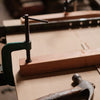
Woodworkers often say you can never have too many clamps, but beginners can start with just a few. Clamps hold parts during glue-ups, secure work while drilling or sanding and help keep assemblies aligned.
A pair of medium bar clamps or F-style clamps is a useful first purchase. Add smaller clamps for detail work and larger clamps when your projects grow.
7. Sandpaper and a Sanding Block
Sanding is one of the simplest ways to improve how a project looks and feels. A basic sanding block helps keep the surface flat while reducing scratches and rough edges.
Keep several grits on hand. Start with a coarser grit only when you need to remove noticeable marks or unevenness, then move through finer grits instead of jumping directly to a very fine paper.
What Should You Buy Next?
Once these basics are covered, let your projects decide what comes next. If you build cabinets, you may want more measuring tools and clamps. If you make decorative pieces, you may add carving tools. If you work with larger stock, a drill, circular saw, router or power sander may become more useful.
The best beginner workshop is not the one with the most equipment. It is the one where every tool has a clear purpose and you know how to use it safely and accurately.
HighestForge tip: Build your tool collection slowly. A smaller set of dependable tools that you understand well will usually serve you better than a large collection purchased all at once.