Workshop Safety Essentials: Eye, Ear and Dust Protection
- by HighestForge
Woodworking is more enjoyable when the shop is organized around safe habits. Sharp tools, spinning cutters, flying chips, noise and fine dust are normal parts of the work, so personal protective equipment and good setup should be part of the project from the beginning.
No single piece of safety equipment covers every risk. Your protection should match the tool, material and operation you are performing. Always follow the instructions provided by the tool and safety equipment manufacturers.
Protect Your Eyes
Safety glasses are one of the most basic pieces of workshop equipment. Cutting, routing, drilling, sanding and even hammering can send chips or fragments toward your face.
Use eye protection designed for workshop use and make sure it fits comfortably enough that you will actually wear it. Ordinary fashion glasses are not a substitute for rated protective eyewear.
Use Hearing Protection Around Loud Tools
Many woodworking machines and power tools produce sound levels that can become harmful with enough exposure. Hearing damage can build gradually, which makes it easy to ignore.
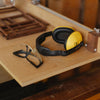
Earmuffs are quick to put on and remove. Earplugs are compact and can be comfortable for longer periods when fitted correctly. Choose appropriate hearing protection for the noise level and follow the manufacturer's fit instructions.
Take Wood Dust Seriously
Sanding and machining wood can create fine airborne dust. A clean-looking shop can still contain particles that are difficult to see.
Use dust extraction at the tool whenever possible, keep filters and collection equipment maintained and provide appropriate ventilation. For operations that create airborne dust, use respiratory protection suitable for the exposure and fitted according to the manufacturer's instructions.
Do Not Rely on a Dust Mask for Everything
Different hazards require different forms of respiratory protection. Fine wood dust, finish vapors and other airborne contaminants are not all controlled in the same way.
Read product labels and safety information, especially when working with finishes, solvents, adhesives or treated materials. If a product requires specific ventilation or respiratory protection, follow those requirements.
Secure the Workpiece
A moving board can turn an easy operation into a dangerous one. Use clamps, a vise or another appropriate workholding method when the task allows it.
Keep hands away from cutting paths, and never hold a small part near a moving blade or bit when a safer jig or holding method can be used.
Keep the Floor and Bench Clear
Offcuts, cords, dust piles and scattered tools create trip hazards and distractions. A cleaner work area also makes it easier to find the correct tool instead of improvising.
Build cleanup into your workflow rather than waiting until the end of the day. A few minutes between operations can make the next step easier and safer.
Disconnect Power Before Adjustments
Before changing blades, bits or accessories, follow the manufacturer's procedure for making the tool safe. That often means unplugging a corded tool or removing the battery from a cordless one.
Do not rely only on the trigger switch. Preventing accidental startup is the goal.
Inspect Tools Before Use
Look for damaged cords, loose parts, cracked accessories, dull cutters and other obvious problems. Make sure guards and safety devices are installed and operating as designed.
A dull cutting edge can require extra force and produce poor control. Maintain blades, bits and hand tools so they cut as intended.
Avoid Loose Clothing and Jewelry
Loose sleeves, jewelry, long hair and dangling items can become caught in rotating equipment. Secure anything that could reach a moving part before operating machinery.
Give Every Operation Your Full Attention
Fatigue and distraction increase mistakes. If an operation feels rushed or awkward, stop and improve the setup before continuing.
Think through the cut before starting. Know where your hands will be, where the tool will move, where the offcut will go and how you will finish the motion safely.
Build a Repeatable Safety Routine
A simple routine makes safe behavior easier to maintain:
- Put on the protection required for the task.
- Inspect the tool and workpiece.
- Secure the material.
- Check the cutting path and surrounding area.
- Connect dust extraction when appropriate.
- Make the cut only when the setup feels controlled.
Good workshop safety is not about being afraid of tools. It is about creating conditions where you can focus on the craft with fewer unnecessary risks. Protect your eyes, hearing and lungs, keep the work secure and make careful setup part of every project.
- Posted in:
- Dust Collection
- Safety Gear
- Woodworking
- Workshop Safety