Woodworking Clamps: The Types You Actually Need
- by HighestForge
Clamps are among the least glamorous tools in a workshop, but they solve problems constantly. They hold parts during glue-ups, keep boards from moving while you drill or sand, pull joints together and make many operations safer by securing the workpiece.
You do not need every clamp style on day one. Understanding what the common types are designed to do will help you build a useful collection without buying tools that sit unused.
F-Style Clamps
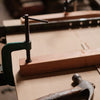
F-style clamps are a strong general-purpose choice. They have a fixed jaw, a sliding jaw and a screw handle for applying pressure. They work well for small glue-ups, holding jigs, securing a board to a bench and many everyday tasks.
A few medium-size F-style clamps are a smart starting point because they are quick to position and versatile.
Bar Clamps and Parallel Clamps
Longer bar clamps are useful when assembling wider projects such as panels, cabinet cases and small tables. Parallel clamps are designed to keep their jaws more nearly parallel under pressure, which can help during casework and panel glue-ups.
They are larger and usually more expensive than basic F-style clamps, so it makes sense to add them when your projects start requiring greater capacity.
Pipe Clamps
Pipe clamps use a length of threaded pipe as the bar. One advantage is flexibility because the clamp capacity depends on the pipe length you install.
They are a practical option for larger glue-ups. Their weight can also be useful, although it means you need to support the project properly while positioning them.
Quick-Grip Clamps
One-handed or quick-grip clamps are convenient for positioning parts, temporary holding and lighter-duty work. They usually do not provide the same clamping pressure as heavier screw clamps, but speed is their advantage.
They are especially useful when one hand is already occupied holding the workpiece in place.
Spring Clamps
Spring clamps act like oversized clothespins. They are fast, inexpensive and helpful for small parts, edge banding, light holding and temporary positioning.
Because their capacity and pressure are limited, they complement larger clamps rather than replacing them.
Corner and Specialty Clamps
Corner clamps can help hold parts near 90 degrees during assembly. Other specialty clamps are designed for face frames, edging, picture frames and specific forms of joinery.
Buy specialty clamps when a recurring project justifies them. A tool designed for one task is valuable when you perform that task often, but it can be unnecessary for a beginner who is still exploring different types of woodworking.
How Much Pressure Do You Need?
More pressure is not always better. Excessive force can bow parts, squeeze out too much adhesive or damage softer wood. The goal is even contact across the joint.
For glue-ups, follow the adhesive manufacturer's recommendations. Position enough clamps to close the joint consistently, and check that the assembly stays flat and square as pressure is applied.
Protect the Workpiece
Clamp jaws can dent wood. Use protective pads or scrap blocks when needed, especially with soft species or finished surfaces.
Cauls, which are straight pieces placed across an assembly, can spread pressure and help keep panels aligned. A little preparation often reduces the amount of sanding and correction needed later.
A Good Starter Clamp Collection
A practical beginner set could include:
- Four medium F-style clamps
- Two longer bar or parallel clamps
- Several small quick-grip or spring clamps
From there, add capacity rather than collecting random sizes. If your next project is a wide tabletop, add long clamps. If you build boxes and frames, smaller clamps may be more useful.
Store Clamps Where You Can Reach Them
Clamps are most useful when they are easy to grab. A simple wall rack keeps them visible, reduces clutter and makes it easier to choose the correct size before glue is already on the joint.
A thoughtful clamp collection grows with your projects. Start with versatile sizes, learn how much pressure your work actually requires and add specialized clamps only when a real need appears.
- Posted in:
- Assembly
- Clamps
- Woodworking
- Workshop Essentials